 |
|||||||
 |
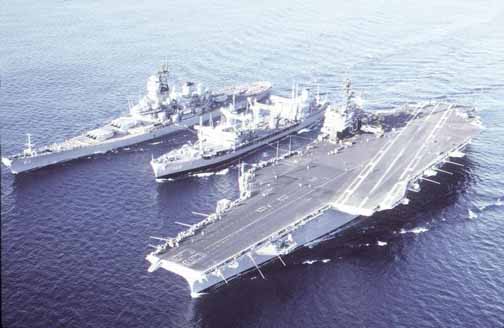
U.S.S. KITTY HAWK
(CV-63)SEMPER HAWK
Click to view crew list
USS Kitty Hawk was named for the site of the Wright Brothers first powered flight in 1903. The second ship by this name, she was commissioned April 21, 1961. After a voyage around South America, the ship joined the Pacific Fleet. Her initial cruises were off the west coast and on to Japan in 1963 and 1964.
The last half of the 1960’s saw the ship in combat operations throughout Southeast Asia. She was given the Naval Unit Commendation for the dedication of her crew during her first Vietnam deployment. In 1973, she underwent an overhaul to make her a multi-purpose carrier.
The rest of the 1970’s saw Kitty Hawk deployed to the Western Pacific. On a single deployment in 1979-1980, the ship was sent to help rescue Vietnamese refugees, provide support after the assassination of the Korean president, and sent to the North Arabian Sea during the Iran hostage crisis.
Throughout the rest of her career, the ship continued operations around the Pacific and Middle East. She was involved with various actions in Iraq from the 1990’s onward. The ship was formally decommissioned on May 12, 2009. It remains in reserve until 2015 when the next carrier comes on line.
CV-63 Deployments - Major Events
| Add a CV-63 Shellback Initiation | Add a CV-63 Deployment - Major Event | ||||
| Month | Year | to | Month | Year | Deployment / Event |
|---|---|---|---|---|---|
| JAN | 1956 | - | JAN | 1961 | Construction of CV63 was done by New York Shipbuilding Corp |
| DEC | 1956 | - | Keel Date: 27 DEC 1956 at New York Naval Shipyard New York City | ||
| DEC | 1956 | - | DEC | 1956 | Cv63 was built by NY shipbuilding corp Camden NJ not NY navy yar |
| DEC | 1956 | - | DEC | 1956 | Cv63 was built by NY shipbuilding corp Camden NJ not NY navy yar |
| MAY | 1960 | - | Launch Date: 21 MAY 1960 | ||
| JAN | 1961 | - | OCT | 1961 | rounding the horn |
| FEB | 1961 | - | FEB | 1961 | Builder's Trials 21-24 February 1961 |
| APR | 1961 | - | Commissioned: 29 APR 1961 | ||
| APR | 1961 | - | Shellback Initiation - 12 APR 1961 - Pacific Ocean | ||
| MAY | 1961 | - | Shellback Initiation - 21 MAY 1961 - Pacific Ocean | ||
| AUG | 1961 | - | SEP | 1961 | Guantanamo Bay 14 AUG to 15 SEP 1961 |
| SEP | 1961 | - | SEP | 1961 | Crossing The Line 22 September 1961 Atlantic Ocean |
| SEP | 1961 | - | Shellback Initiation - 12 SEP 1961 - Atlantic Ocean | ||
| SEP | 1961 | - | Shellback Initiation - 22 SEP 1961 - Atlantic Ocean | ||
| OCT | 1961 | - | OCT | 1961 | Brotherhood of Horned Shellbacks |
| OCT | 1961 | - | OCT | 1961 | Cape Horn |
| SEP | 1962 | - | NOV | 1962 | Cuban Crises Yokosuka Japan CV 63 first visit to Japan |
| SEP | 1962 | - | APR | 1963 | West Pac |
| OCT | 1963 | - | JUN | 1964 | First carrier group deployed off of Vietnam April 1964 |
| APR | 1964 | - | MAY | 1964 | West Pac-Viet Nam |
| APR | 1964 | - | MAY | 1964 | West Pac-Viet Nam |
| AUG | 1964 | - | JUL | 1965 | Dry Dock |
| SEP | 1965 | - | MAY | 1966 | West Pac |
| OCT | 1965 | - | MAY | 1966 | West Pac-Viet Nam |
| OCT | 1965 | - | MAY | 1966 | West Pac |
| JAN | 1966 | - | JAN | 1970 | West Pac-Viet Nam |
| NOV | 1966 | - | JUN | 1967 | West Pac-Viet Nam |
| DEC | 1966 | - | JAN | 1967 | West Pac |
| JAN | 1967 | - | JAN | 1969 | West Pac-Viet Nam |
| JAN | 1967 | - | FEB | 1971 | West Pac-Viet Nam |
| JUN | 1967 | - | JUN | 1968 | West Pac |
| DEC | 1967 | - | JUN | 1968 | West Pac-Viet Nam |
| DEC | 1967 | - | JUN | 1968 | Golden Dragon - 180th Meridian |
| DEC | 1967 | - | JUN | 1968 | West Pac-Viet Nam |
| DEC | 1967 | - | JUN | 1968 | West Pac-Viet Nam |
| DEC | 1967 | - | JUN | 1968 | West Pac-Viet Nam |
| JAN | 1968 | - | DEC | 1969 | West Pac-Viet Nam |
| JAN | 1968 | - | JAN | 1969 | West Pac-Viet Nam |
| DEC | 1968 | - | OCT | 1969 | West Pac-Viet Nam |
| DEC | 1968 | - | OCT | 1969 | Deployment |
| SEP | 1969 | - | JUN | 1970 | Overhaul Bremerton WA |
| JUL | 1970 | - | Shellback Initiation - 10 JUL 1970 - Pacific Ocean | ||
| SEP | 1970 | - | JUN | 1971 | West Pac-Viet Nam |
| SEP | 1970 | - | JUL | 1971 | West Pac |
| NOV | 1970 | - | JUL | 1971 | West Pac-Viet Nam |
| JAN | 1971 | - | JUL | 1974 | West Pac-Viet Nam |
| JUN | 1971 | - | Shellback Initiation - 19 JUN 1971 - Pacific Ocean | ||
| NOV | 1971 | - | FEB | 1972 | West Pac-Viet Nam |
| FEB | 1972 | - | NOV | 1972 | West Pac-Viet Nam |
| APR | 1972 | - | Shellback Initiation - 1 APR 1972 - Pacific Ocean | ||
| APR | 1972 | - | NOV | 1972 | West Pac-Viet Nam |
| APR | 1972 | - | NOV | 1972 | West Pac-Viet Nam |
| JAN | 1973 | - | APR | 1973 | Dry Dock |
| JAN | 1973 | - | JAN | 1973 | Dry Dock |
| JAN | 1973 | - | JAN | 1974 | Dry Dock |
| JAN | 1973 | - | DEC | 1975 | West Pac |
| SEP | 1973 | - | SEP | 1973 | RIMPAC |
| NOV | 1973 | - | JUL | 1974 | West Pac |
| NOV | 1973 | - | JUL | 1976 | West Pac-Viet Nam |
| NOV | 1973 | - | JUL | 1976 | West Pac-Viet Nam |
| MAR | 1974 | - | Shellback Initiation - 18 MAR 1974 - Indian Ocean | ||
| MAR | 1974 | - | Shellback Initiation - 18 MAR 1974 - Atlantic Ocean | ||
| AUG | 1974 | - | JAN | 1975 | RIMPAC |
| JAN | 1975 | - | MAR | 1975 | RIMPAC |
| MAY | 1975 | - | DEC | 1975 | West Pac |
| MAY | 1975 | - | SEP | 1975 | West Pac |
| MAR | 1976 | - | APR | 1977 | Overhaul Bremerton WA |
| OCT | 1977 | - | MAY | 1978 | West Pac |
| APR | 1978 | - | Shellback Initiation - 5 APR 1978 - Indian Ocean | ||
| SEP | 1978 | - | Shellback Initiation - 3 SEP 1978 - Pacific Ocean | ||
| MAY | 1979 | - | MAR | 1980 | West Pac |
| MAY | 1979 | - | FEB | 1980 | West Pac-Indian Ocean (Korean & Iran Hostage Crisis) |
| MAY | 1979 | - | FEB | 1980 | West Pac-Indian Ocean-Persian Gulf |
| MAY | 1979 | - | FEB | 1980 | West Pac |
| MAY | 1979 | - | MAR | 1980 | West Pac |
| NOV | 1979 | - | Shellback Initiation - 29 NOV 1979 - Indian Ocean | ||
| NOV | 1979 | - | Shellback Initiation - 27 NOV 1979 - Pacific Ocean | ||
| JAN | 1980 | - | Shellback Initiation - 15 JAN 1980 - Indian Ocean | ||
| JAN | 1980 | - | SEP | 1980 | West Pac |
| MAR | 1980 | - | SEP | 1980 | West Pac-Indian Ocean-Persian Gulf |
| APR | 1980 | - | Shellback Initiation - 5 APR 1980 - Indian Ocean | ||
| APR | 1981 | - | NOV | 1981 | West Pac-Indian Ocean |
| JUL | 1981 | - | Shellback Initiation - 2 JUL 1981 - Indian Ocean | ||
| JUL | 1981 | - | Shellback Initiation - 7 JUL 1981 - Pacific Ocean | ||
| JUL | 1981 | - | Shellback Initiation - 7 JUL 1981 - Pacific Ocean | ||
| JAN | 1982 | - | FEB | 1983 | Overhaul - Bremerton |
| JAN | 1984 | - | JUL | 1984 | West Pac |
| JAN | 1984 | - | AUG | 1984 | West Pac-Indian Ocean |
| JUN | 1984 | - | Shellback Initiation - 15 JUN 1984 - Indian Ocean | ||
| JUL | 1985 | - | DEC | 1985 | West Pac |
| OCT | 1985 | - | Shellback Initiation - 8 OCT 1985 - Indian Ocean | ||
| AUG | 1986 | - | Shellback Initiation - 17 AUG 1986 - Indian Ocean | ||
| JAN | 1987 | - | JUL | 1987 | World Cruise |
| APR | 1987 | - | Shellback Initiation - 25 APR 1987 - Indian Ocean | ||
| JUL | 1987 | - | AUG | 1990 | Overhaul Philadelphia Naval Shipyard |
| JUN | 1991 | - | DEC | 1991 | Desert Shield |
| JUN | 1991 | - | DEC | 1991 | South America |
| NOV | 1991 | - | Shellback Initiation - 2 NOV 1991 - Atlantic Ocean | ||
| NOV | 1991 | - | NOV | 1991 | Shellback Initiation - 2 November 1991 |
| JUN | 1992 | - | MAY | 1993 | Desert Shield |
| JUN | 1992 | - | JUL | 1992 | RIMPAC |
| NOV | 1992 | - | MAY | 1993 | Desert Shield |
| NOV | 1992 | - | MAY | 1993 | West Pac-Indian Ocean-Persian Gulf |
| NOV | 1992 | - | MAY | 1993 | Desert Storm |
| APR | 1993 | - | Shellback Initiation - 1 APR 1993 - Indian Ocean | ||
| JUN | 1994 | - | DEC | 1994 | West Pac |
| OCT | 1996 | - | APR | 1997 | West Pac |
| NOV | 1996 | - | Shellback Initiation - 30 NOV 1996 - Indian Ocean | ||
| MAR | 1997 | - | Shellback Initiation - 29 MAR 1997 - Pacific Ocean | ||
| JUN | 1997 | - | AUG | 2001 | Mediterranean-Indian Ocean-Persian Gulf |
| JUN | 1997 | - | AUG | 2001 | West Pac |
| MAR | 1999 | - | AUG | 1999 | West Pac |
| JUL | 1999 | - | Shellback Initiation - 24 JUL 1999 - Indian Ocean | ||
| MAY | 2001 | - | Shellback Initiation - 5 MAY 2001 - Pacific Ocean | ||
| SEP | 2001 | - | DEC | 2001 | Operation Enduring Freedom |
| OCT | 2001 | - | DEC | 2001 | Mediterranean-Indian Ocean |
| MAY | 2002 | - | Shellback Initiation - 14 MAY 2002 - Indian Ocean | ||
| JUN | 2003 | - | JUL | 2006 | RIMPAC |
| JAN | 2006 | - | JAN | 2008 | Mediterranean-Indian Ocean-Persian Gulf |
| AUG | 2006 | - | Shellback Initiation - 5 AUG 2006 - Pacific Ocean | ||
| JAN | 2007 | - | JAN | 2011 | Sea Trials |
| JAN | 2007 | - | JAN | 2008 | West Pac |
CV-63 General Specifications
Class: Kitty Hawk-class aircraft carrier
Named for: Kitty Hawk
Complement: 5624 Officers and Enlisted
Displacement: 61351 tons
Length: 1 068.9 feet
Beam: 282 feet
Flank Speed: 33 knots
USS KITTY HAWK (CV-63)
The second Kitty Hawk (CVA-63) was laid down by the New York Ship Building Corp. Camden N.J. 27 December 1956; and launched 21 May 1960 sponsored by Mrs. Neil H. McElroy; and commissioned 21 April 1961 at Philadelphia Naval Shipyard Captain William F. Bringle in command.
Following shakedown in the Western Atlantic Kitty Hawk departed Norfolk 11 August 1961. After a brief stop at Rio de Janeiro where she embarked the Secretary of the Brazilian Navy for a demonstration of exercise at sea with five Brazilian d estroyers the attack carrier rounded Cape Horn 1 October. She steamed into Valparaiso Bay 13 October and then sailed 2 days later for Peru arriving Callao 20 October where she entertained the President of Peru. At San Diego Admiral George W An derson Chief of Naval Operations landed on her deck 18 November to witness antisubmarine demonstrations by Henry B. Wilson (DDG-7) and Blueback (SS-581) a Terrier missile demonstration by Topeka (CLG-8) and air demonstra tions by Kitty Hawk.
Kitty Hawk entered San Francisco Naval Shipyard 23 November 1961 for alterations. Following operations out of San Diego she sailed from San Francisco 13 September 1962. Kitty Hawk joined the 7th Fleet 7 October 1962 relieving M idway (CVA-41) as flagship.
After participating in the Philippine Republic Aviation Week Air Show Kitty Hawk steamed out of Manila Harbor 30 November 1962 and welcomed Admiral H. D. Felt Commander in Chief Pacific Fleet for a demonstration of modern naval weapons 3 December. The ship visited Hong Bong early in December and returned to Japan arriving at Yokosuka 2 January 1963. During the following 2 months she visited Kobe Beppu and Iwakuni before returning to San Diego 2 April 1963.
On 6 June 1963 President Kennedy with top civilian and military leaders boarded Kitty Hawk to witness a carrier task force weapons demonstration off the California coast. Addressing the men of the task group from Kitty Hawk President Kennedy told them that as in the past control of the seas still means security peace and ultimate victory. He later wrote to President and Madam Chiang Kai-Shek who had witnessed a similar demonstration on board Constellation (CVA -64): "I hope you were impressed as I was on my visit to Kitty Hawk with the great force for peace or war which these mighty carriers and their accompanying escorts provide helping to preserve the freedom of distant nations in all parts of the world."
Following a series of strike exercises and tactics reaching along the California coast and off Hawaii Kitty Hawk again sailed for the Far East. While approaching Japan she learned an assassin had shot President Kennedy. Flags were a t half mast as she entered Sasebo Harbor 25 November 1963 the day of the President's funeral and as senior ship present she had the sad honor of firing memorial salutes. After cruising the South China Sea and ranging to the Philippines in readines s operations with the 7th Fleet she returned to San Diego 20 July 1964.
Kitty Hawk overhauled in Puget Sound Naval Shipyard then trained along the western seaboard. She sailed from San Diego 19 October 1965 for Hawaii thence to Subic Bay P.I. where she prepared for combat operations off the coast of Vietnam.
Kitty Hawk was awarded the Navy Unit Commendation for exceptionally meritorious service from 26 November 1965 to 14 May 1966 while participating in combat operations against the insurgent Communist guerrilla forces in the Republic of Vietnam. The valiant men of her Carrier Air Wing 11 flew over 10 000 sorties and delivered over 10 700 tons of ordnance against enemy forces. The officers and men of Kitty Hawk displayed undaunted spirit courage professionalism and dedication to mai ntain their ship as a fighting unit under the most ardent operating conditions to enable her pilots to destroy vital military targets in North Vietnam despite intense opposition and extremely adverse weather conditions.
Kitty Hawk returned to San Diego in June 1965 for overhaul and training until 4 November 1966 when she again deployed to serve the cause of freedom and national security in waters of Southeast Asia. Kitty Hawk arrived at Yokosuka
Japa
n
19 November to relieve Constellation as flagship for Rear Admiral David C. Richardson
Commander Task Force 77. On 26 November
Kitty Hawk departed Yokosuka for Yankee Station via Subic Bay
and on 5 December
aircraft from Kitty
Hawk began their around-the-clock missions over North Vietnam. About this time Kitty Hawk--already accustomed to celebrities as guests--entertained a number of extremely prominent visitors: William Randolph Hearst
Jr.; Bob Considi
ne; Dr. Billy Graham; and John Steinbeck
among others. She remained in the Far East supporting the fight for freedom in Southeast Asia until departing Subic Bay 28 May 1967. Steaming via Japan
the carrier reached San Diego 19 June and a week late
r entered the naval shipyard at Long Beach for maintenance. Kitty Hawk returned to San Diego 25 August and began a rigorous training program to prepare her for future action.
[Note: The above USS KITTY HAWK (CV-63) history may or may not contain text provided by crew members of the USS KITTY HAWK (CV-63) or by other non-crew members and text from the Dictionary of American Naval Fighting Ships]
Click Here
U.S.S. KITTY HAWK
(CV-63)
at HullNumber.com
(CV-63)
at HullNumber.com
- - Specs & Deployments
- - Crew Roster
- - Photos
- - NEW -> ALL HANDS
- - Internet Links
- - Reunion Info
Add Your Name to the
CV-63 Crew Roster
HullNumber.com's mission is to provide a means for shipmates to keep in touch with one another.
Registration and communicating with shipmates at Hullnumber.com is FREE FOREVER.
We ask that you enter only enough information about yourself that your shipmates can recall you... Your ORIGINAL HOMETOWN and State are asked for because that confirms who you are in your shipmate's memories.
PRIVACY NOTICE:
HullNumber.com takes your privacy seriously
HullNumber.com does not share your information.
HullNumber.com does not retain your payment information if you make a purchase.
If contacted by a Shipmate through HullNumber, your Shipmate does not have your email address unless you reply.
At the bottom of every email sent by HullNumber is an UNSUBSCRIBE link.